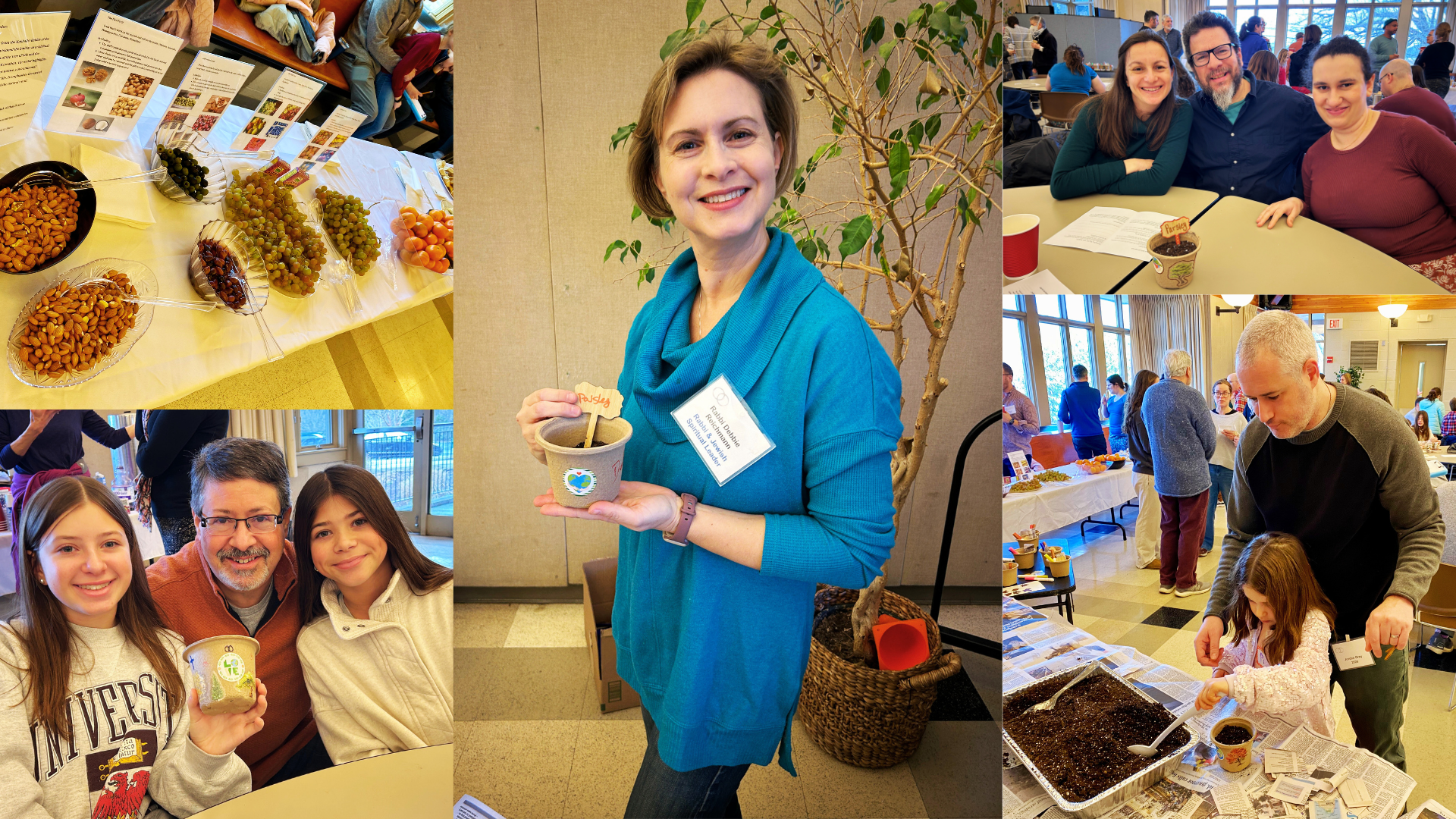
This post is adapted from a reflection given by Rabbi Debbie Reichmann at our IFFP Gathering on February 8th, 2026.
Tu B’shvat is the birthday of the trees. It began as a practical means to calculate when a tree’s produce could be used according to sacred law.
Leviticus 19:23-25 instructs us that when we enter the land and plant a tree for food, we shall regard its fruit as forbidden. For three years, it shall not be eaten. In the fourth year, all its fruit shall be set aside for jubilation before God, and only in the fifth year may you use its fruit.
To manage this, the rabbis established a date as early in the spring as possible to measure these plantings. Any tree planted before that date—whether eleven months or two weeks prior—was considered one year old. If this seems unusual, consider our schools: children can be almost a year apart in chronological age, yet they all belong to the same grade. It is the same for the trees.
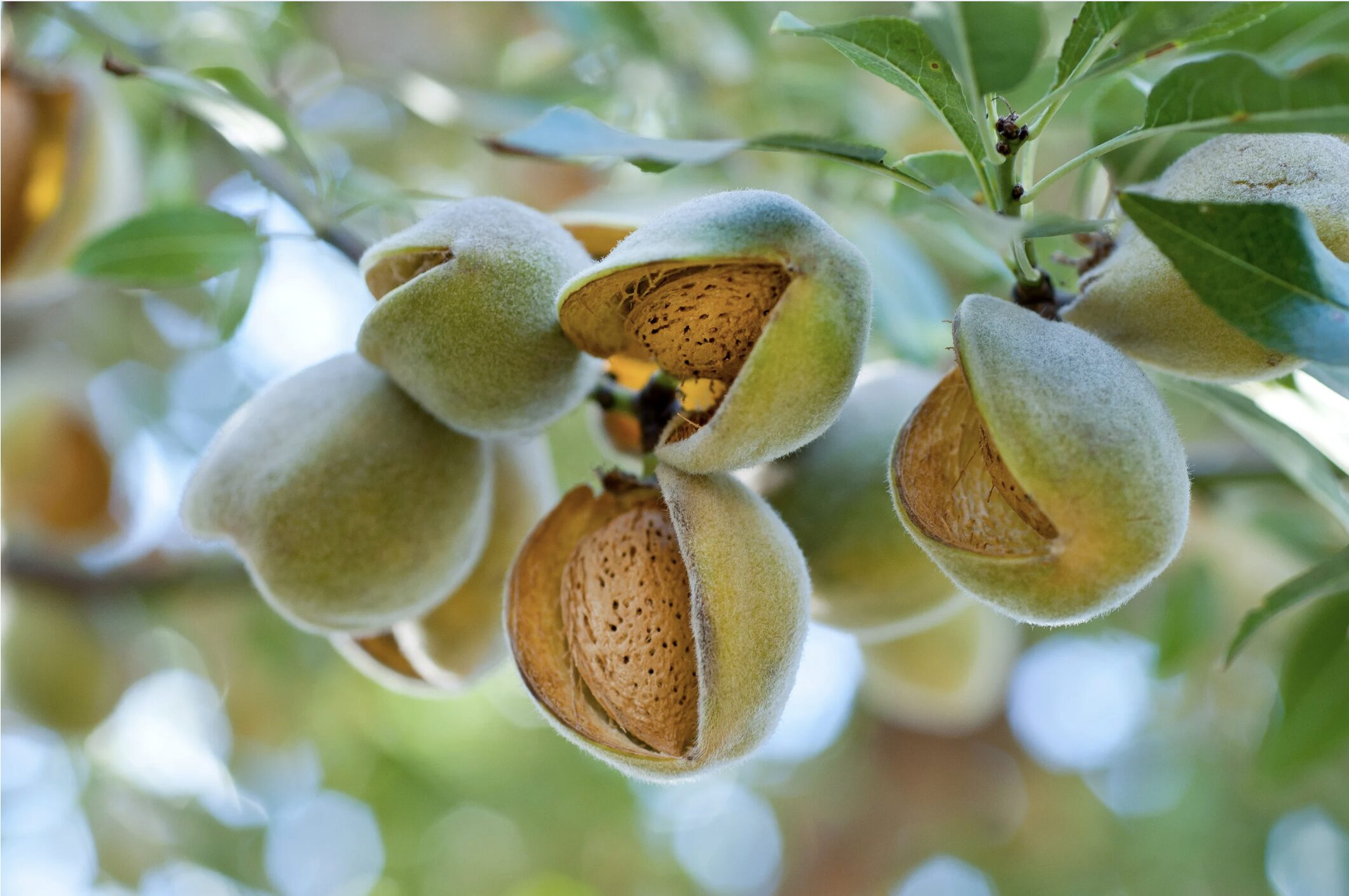
Our Sunday School kids learned a beloved song from my childhood called “Hashekdiah Porachat.” The Shaked, or shkediah, is the almond tree. It is one of the earliest to bloom, flowering in Israel during January or February to signal the arrival of Spring.
Since biblical times, the almond tree has been inextricably linked to the Land of Israel and the Jewish people:
- It was among the “choice gifts” Jacob sent to Egypt to secure Benjamin’s release.
- Aaron’s rod, made of almond wood, famously sprouted while placed in the Tabernacle.
- The cups of the Menorah were crafted to resemble almond blossoms.
This is no ordinary tree—though, in truth, there is no such thing as an “ordinary” tree.
In Israel, almonds have historically been a vital agricultural product, flourishing around the Sea of Galilee. While many imagine Israel as only desert, scrubland, or Mediterranean shores, the land is geographically extraordinary. Despite being roughly the size of New Jersey, it contains a diverse range of microclimates: Mediterranean, semi-arid, arid, tropical, swamp, and highland.
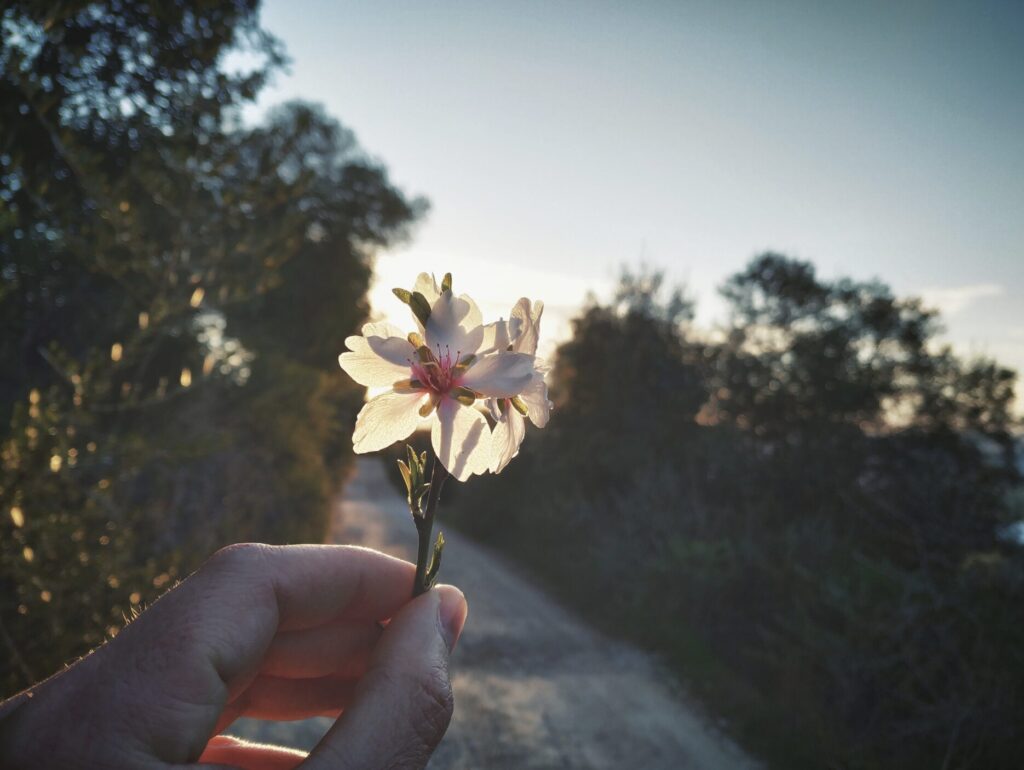
This diversity makes Israel a bellwether for climate change. As a “climate hot spot,” it experiences rising temperatures more acutely than many other regions, resulting in severe heatwaves and intense droughts. While these were biblical challenges, the modern severity is unprecedented. Today, data from these microclimates helps us understand how the rest of the world will change, serving as a laboratory for adaptation and innovation.
Let’s look again at that almond tree. It is a thirsty creation, requiring about one gallon of water for a single almond. Even though it has been native to the land for over 3,000 years, it would not survive today without drip irrigation, a technology pioneered in Israel.
Yet, even our best technology struggles against a changing sky. Extreme heatwaves and “false springs” (early thaws followed by sudden cold snaps) can cause these trees to lose their entire harvest. We know this isn’t exclusive to Israel; the weather is becoming more unpredictable everywhere. The “weird” weather we have experienced here over the last two weeks is a testament to that.
Tu B’shvat is often called the Jewish Earth Day, and it is not hard to see why. It reminds us that our trees are holy; that their produce is not merely a commodity, but a practical and spiritual gift.
As we celebrate this New Year of the Trees, let us look to the Shaked as our teacher. Just as the almond tree is the first to wake from its winter slumber, may it wake us to the needs of our world. May we realize that we are the “drip irrigation” for a parched planet, called to sustain what is fragile and protect what is sacred.