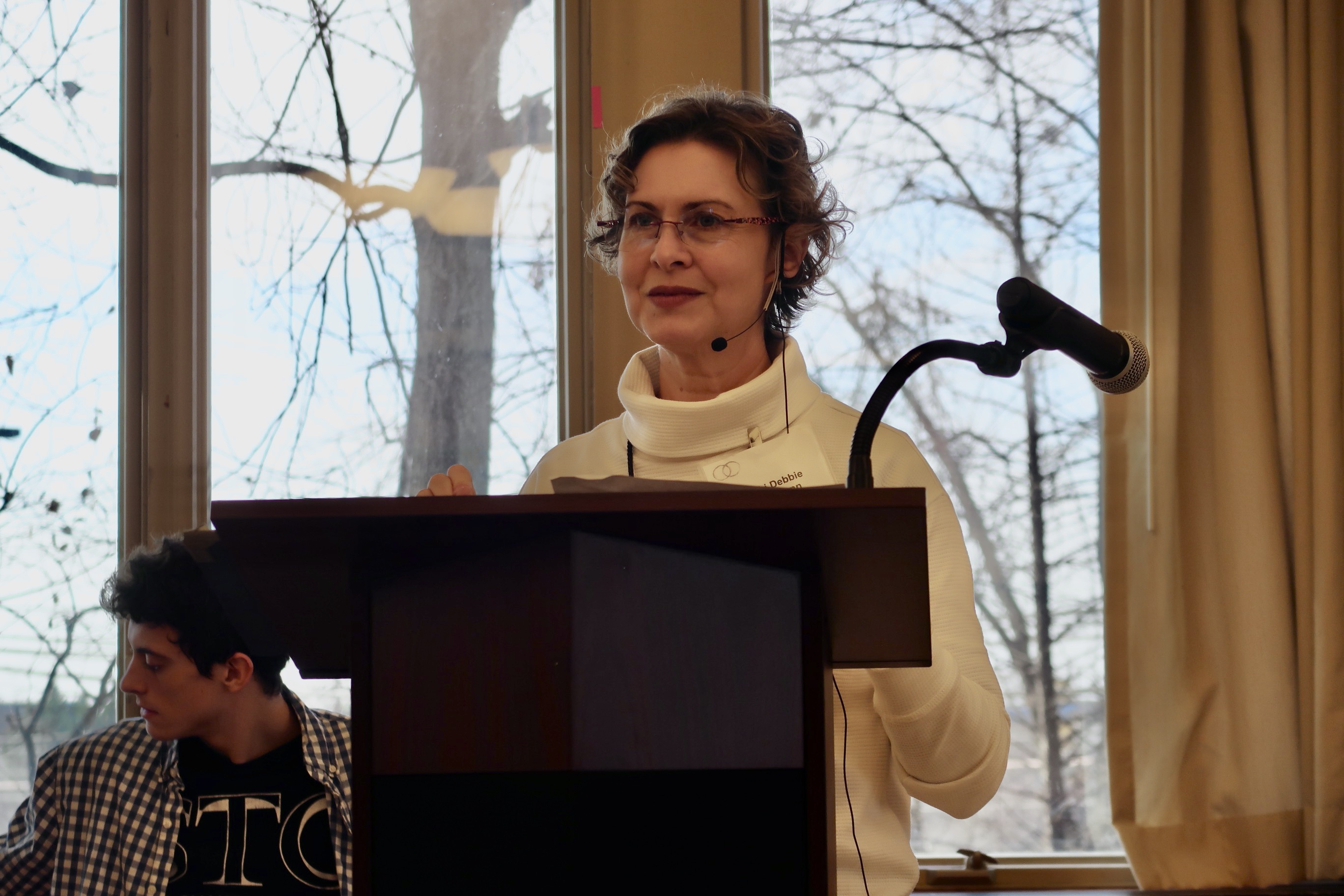
This reflection was offered by Rabbi Debbie Reichmann at our IFFP Chanukah Gathering on December 8th, 2025.
Reading 1: I Maccabees 4: 36–37, 41, 48–49, 56
“Then Judah and his brothers said, “See, our enemies are crushed; let us go up to cleanse the sanctuary and dedicate it.” So all the army assembled and went up to Mount Zion. There they saw the sanctuary desolate, the altar profaned, and the gates burned.
Then Judah detailed men to fight against those in the citadel until he had cleansed the sanctuary. Then they took unhewn stones, as the law directs, and built a new altar like the former one. They also rebuilt the sanctuary and the interior of the temple and consecrated the courts. They made new holy vessels and brought the lampstand, the altar of incense, and the table into the temple. Then they offered incense on the altar and lit the lamps on the lampstand, and these gave light in the temple.
So they celebrated the dedication of the altar for eight days and joyfully offered burnt offerings; they offered a sacrifice of well-being and a thanksgiving offering.”
Reading 2: Shabbat 21b:10 (Talmud)
“The Gemara asks: What is Hanukkah, and why are lights kindled on Hanukkah? The Gemara answers: . . . On the twenty-fifth of Kislev, the days of Hanukkah are eight. . . . When the Greeks entered the Sanctuary they defiled all the oils that were in the Sanctuary by touching them. And when the Hasmonean monarchy overcame them and emerged victorious over them, they searched and found only one cruse of oil that was placed with the seal of the High Priest, undisturbed by the Greeks. And there was sufficient oil there to light the candelabrum for only one day. A miracle occurred and they lit the candelabrum from it eight days.”
At IFFP, it’s customary for our readings to come from both the Hebrew Bible and the New Testament. But the readings we just shared didn’t follow that pattern. In fact, the only scripture reading came from the New Testament.
You might be thinking: Wait—wasn’t that first reading from the Book of Maccabees? Yes, it was. And that’s the point: Maccabees isn’t part of the Hebrew Bible. It isn’t included in the Jewish canon. That may seem like a small footnote, but it matters—and here’s why…
The early Christian canon preserved the Books of the Maccabees at a moment when Rabbinic Judaism ultimately did not include them in the Tanakh, the official Hebrew Bible. In this way, the Christian scriptural world inadvertently became the guardian of a profoundly Jewish story.
By embracing Maccabees 1 and 2 as part of the wider biblical library, Christian communities ensured that the memory of the Hasmonean revolt, the struggle for Jewish religious freedom, and the origins of Chanukah remained accessible for centuries. These books contain some of the most detailed historical accounts of Jewish resistance under Greek oppression, the defense of Torah, and the willingness to sacrifice life rather than abandon faith. Had they not been maintained in Christian canons, they may have survived only in scattered historical references rather than as continuous narrative texts.
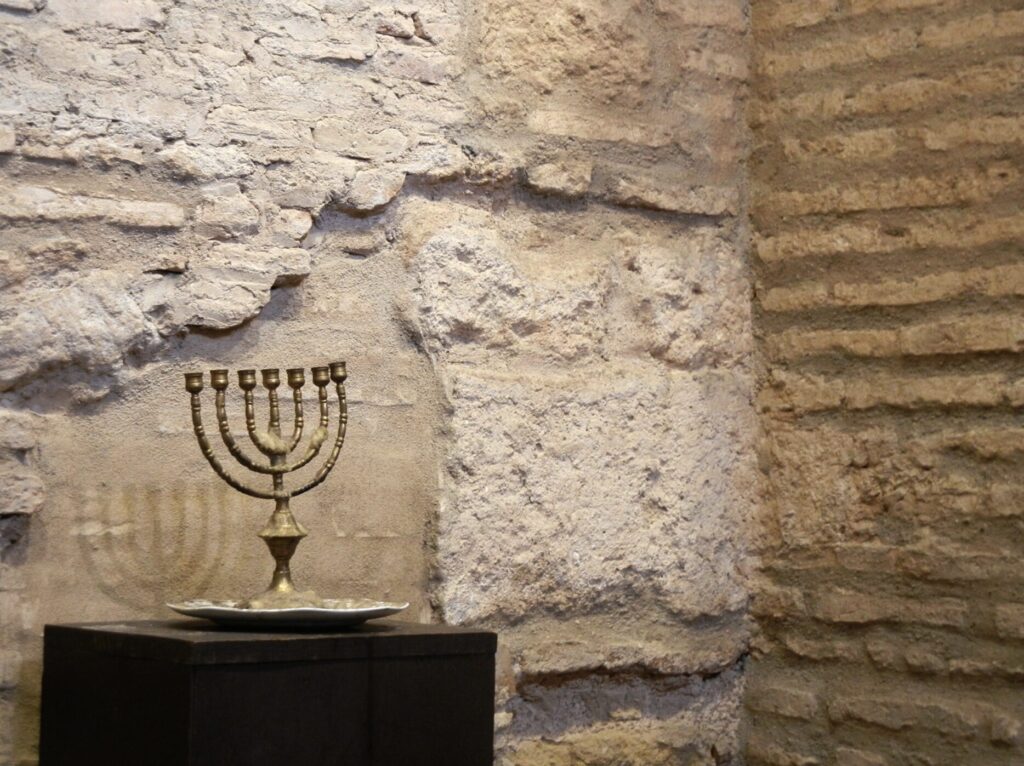
This preservation has had lasting effects. From a Christian perspective, the Maccabean story shaped understandings of martyrdom, influencing how early Christians interpreted courage, suffering, and fidelity to God. At the same time, it kept alive a uniquely Jewish narrative: the assertion of Jewish identity, worship, and self-governance against forced assimilation. For Jewish readers today—especially for interfaith families—there is a certain irony and a certain gift in knowing that one of Judaism’s most well-known stories was safeguarded not by Jewish canon but through the literary decisions of another faith.
Ultimately, the inclusion of Maccabees in Christian biblical canons ensured that the narrative of Chanukah, the Hasmoneans, and the Jewish fight for spiritual autonomy remained part of the Western religious imagination. It offered a bridge between communities and ensured that this chapter of Jewish history, rich with courage and complexity, was never lost to time.
But…. as we just saw in our readings, the books of the Maccabees do not mention the miracle of the oil. The miracle of the oil, where a small amount of oil burned for eight days, is a story that appears later in rabbinic literature, specifically the Babylonian Talmud, which was compiled centuries after the events described in the Maccabees books. The Maccabees accounts focus on the military victory and the rededication of the Temple itself.
What to make of this? Actually, a lot. The Maccabees became the Hasmonean dynasty that ruled Israel from 140 BCE to 63CE, during Roman times. They were the leaders that Jesus railed against, the ones that permitted gambling in the Temple, the ones that persecuted the poor. As a rabbi, Jesus was a part of the opposition, the group dedicated to preserving Judaism through prayer, tradition and ritual, and molded what we know of as modern Judaism.
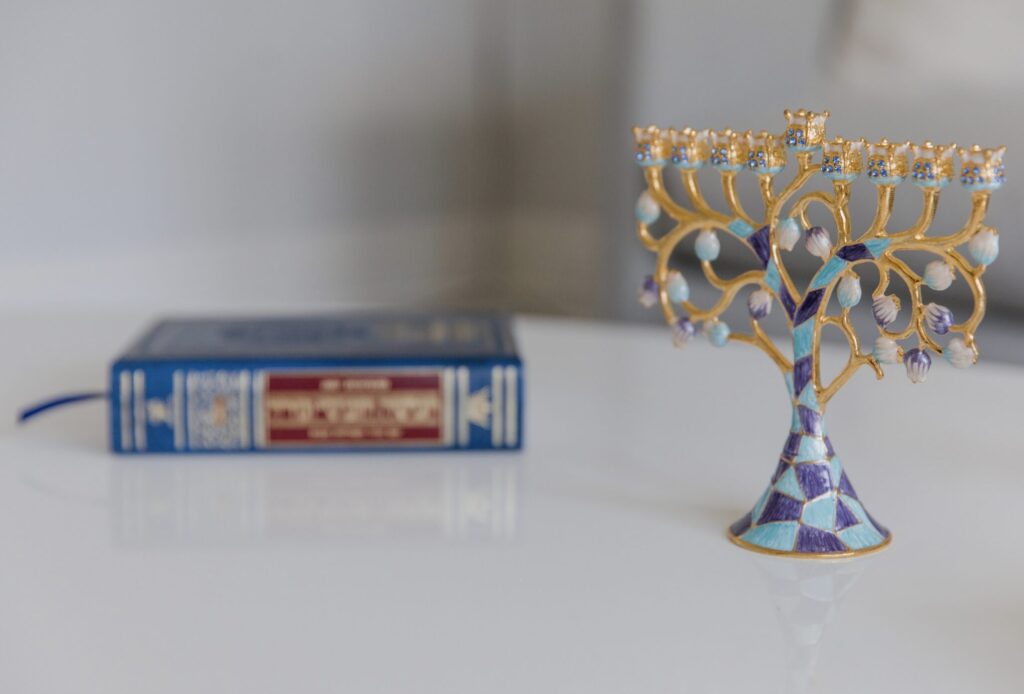
Then why keep the story at all? That’s a good question, but one with a fairly obvious and instinctive answer. Who doesn’t need a party focused on light during the darkest days of the year (in the Northern Hemisphere)? The practicality and human need for this spurred the rabbis to honor the rededication of the Temple, which did apparently happen on the 25 of Kislev – a date that falls between the end of November through the end of December. But, they weren’t going to elevate the conflict and eventual success of the clan that became their enemies. Instead, they inferred a miracle. A miracle from God. A miracle about a scant resource that exceeded expectations. A miracle about light, faith and hope.
Should we call them out for that? No more so than other religions creating or modifying holy days to suit human sociological needs. As far as I’m concerned, the end result of having a holiday of joy, community and wonder during the time of year when we need these reminders is worth the slight fudge.
It is worth it to remember that the point of Chanukah is not the gifts, not the history of a successful rebellion. Not even the games and the food. The point of Chanukah is that having a little, with faith, can become enough. That light is a symbol of hope. That community is a gift to be treasured.
Perhaps that is the real miracle we’re meant to notice—not the oil, not the battles, not the dynasty that rose or fell—but the way a small story, preserved by the Christian tradition, found its way back to Judaism and continues to illuminate our lives. It reminds us that wisdom can be carried across boundaries, that memory can be tended by unexpected hands, and that sacred stories have a way of surviving when people need them most.
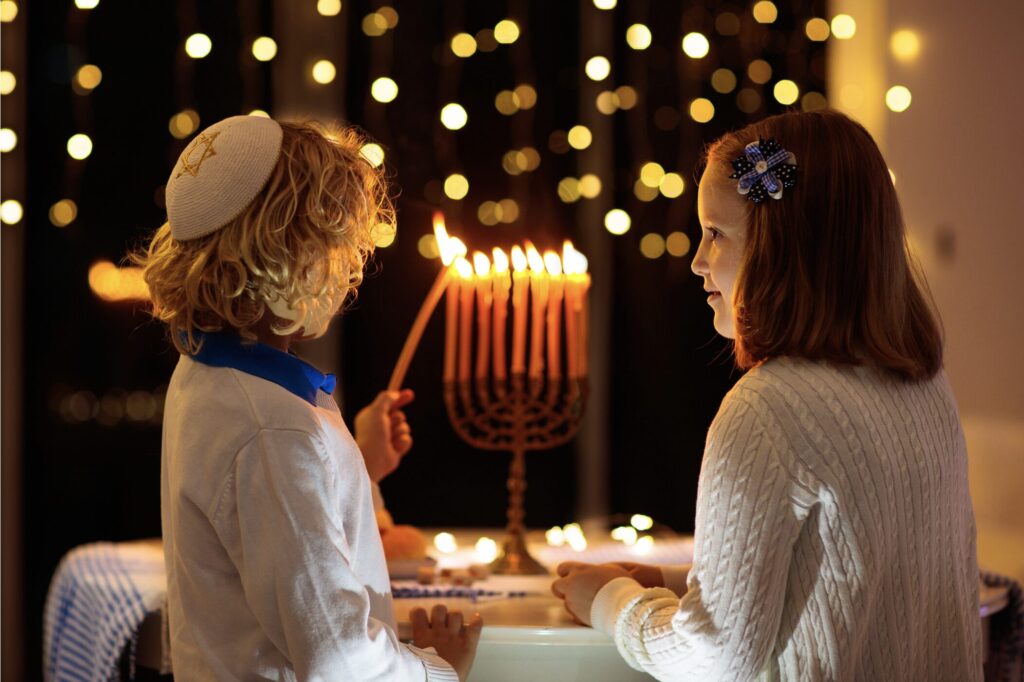
In a season defined by darkness and searching, Chanukah calls us to kindle light wherever we find it: in our homes, in our families, in our interfaith community, and in the shared values that transcend culture and doctrine. It teaches us that courage can begin with a single spark, that hope can outlast scarcity, and that joy can be chosen—even insisted upon—when the nights are long.
As we enter this season together, may we honor the complexity of the past, embrace the richness of our intertwined traditions, and carry forward the simple but profound truth at the heart of this holiday: that even the smallest flame, when protected and shared, can light the way for all of us.