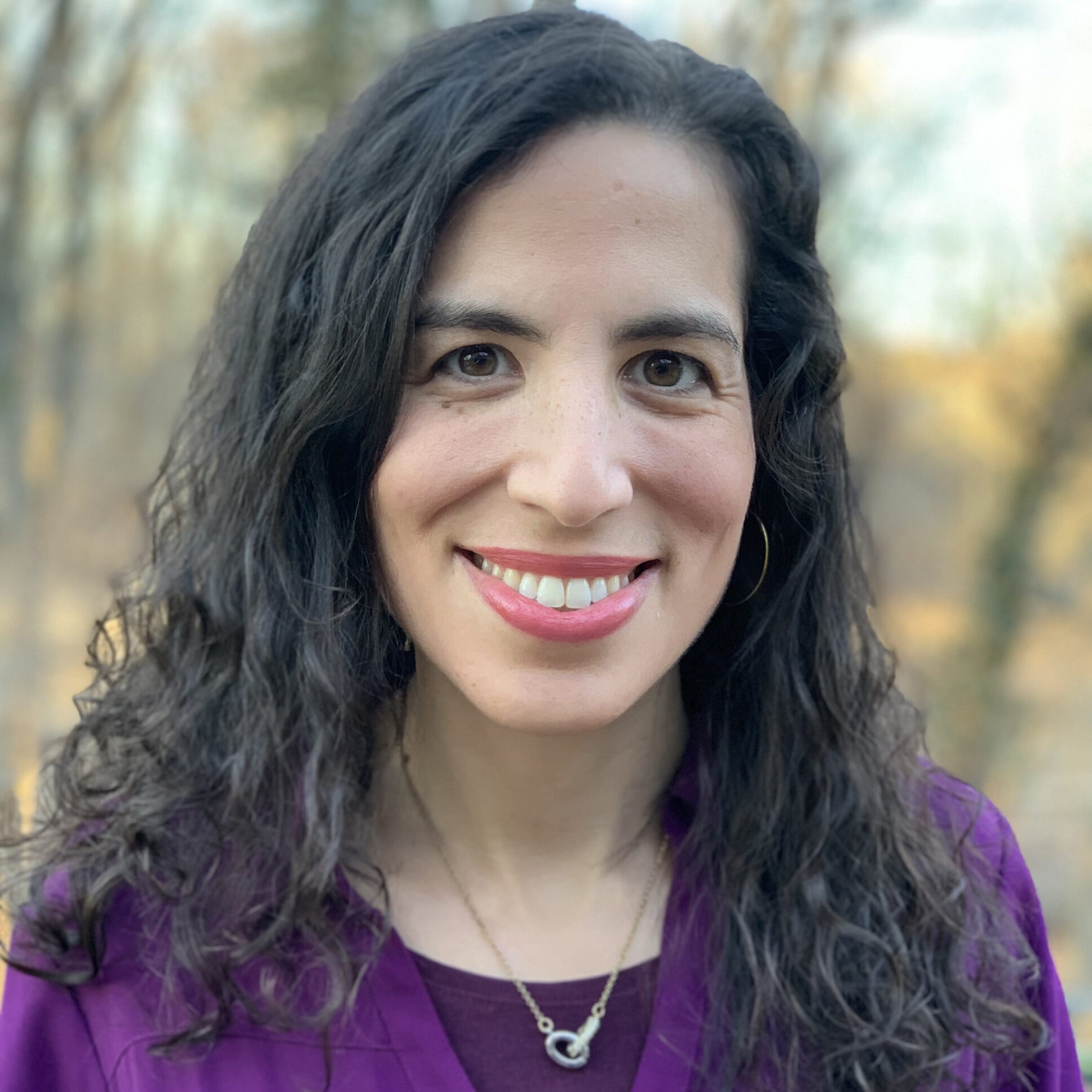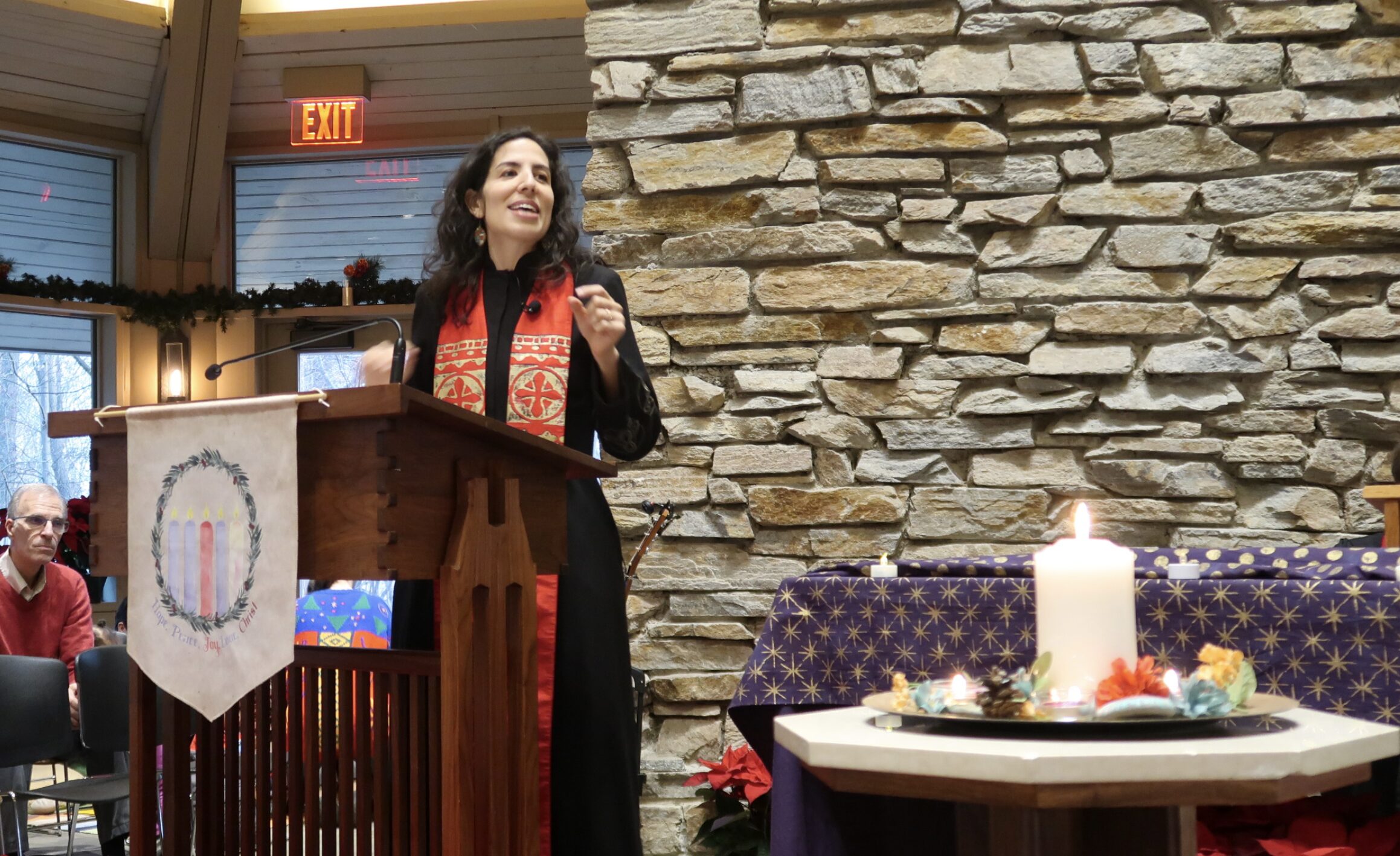
This blog post is adapted from Rev. Samantha Gonzalez-Block’s 2025 Christmas Eve reflection.
Maybe you’ve heard this one:
What do you do when a reverend gets locked out of their house?
You call a rabbi!
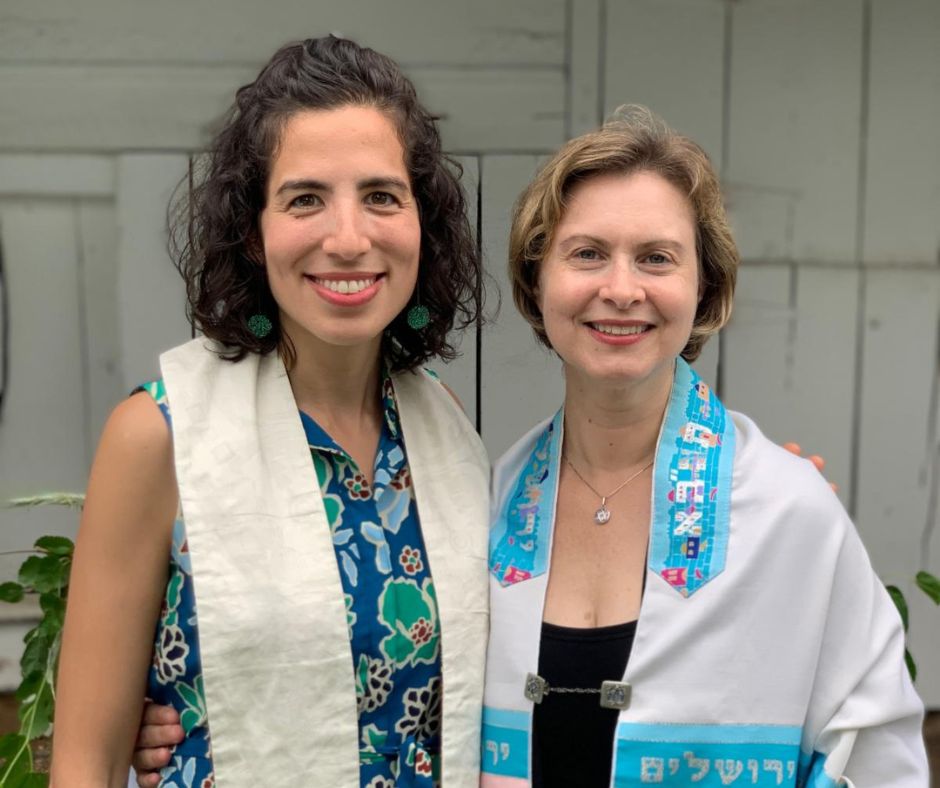
Well, at least I do. You see, I have been locked out of my home more times than I’d like to admit — in the last month — and Rabbi Debbie, our devoted rabbi, who also happens to be my very gracious neighbor, is often my first call for help. Truly, nothing fills me with more holiday cheer than when I hear the sound of our rabbi’s car zooming down the block with that magic key in hand.
Now, be honest with me, has anyone here ever been locked out of their house? Recently? It’s the worst, right?!
I remember as a child coming home from school and realizing I had no key — and devising these wacky plans with my neighbors to help me break in. My favorite was the time we found this large stick and we opened up the window and pushed the stick through it so it would catch the basket with the keys, and then we oh so carefully maneuvered it back through the window. It was crazy — but it worked!
I am sure each of you has your own wild ways of breaking in — or of finding creative solutions to avoid it from happening altogether. Keys hidden in rocks. Codes to the garage. Frantic texts to your roommate. Reaching up through the doggie door. Climbing ladders to the second-floor window….
The point is — more important than our master plans is how being locked out makes us feel.
How does it feel to be locked out?
And it’s not just our homes that have a tendency of shutting us out. We know what it is like to be locked out of other spaces too. Spaces that feel much more raw, and tender, and personal…
Locked out of our offices, our emails, our promotions, our life’s work.
Locked out from making the team, of getting into that dream school or program.
Locked out of that friend group, or that once-steadfast relationship,
Even locked out from feeling safe and secure in our own skin.
Shut out from dear family members, or cherished religious spaces, or from that more honest meeting with the doctor.
Shut out from feeling empowered to speak our mind or make some semblance of change.
Locked out of a system or a country we love and call home.
Locked out by the sound of “Stay out of my room,” “I can’t baptize your baby,” “Clean up your stuff and go.” “You are not welcome here.”
So, I ask us again, how does it feel to be locked out?
One thing is for sure — feeling locked out has the potential to hit us where it hurts — even change us forever.
It is about a ninety-mile journey from Nazareth to Bethlehem — and it wasn’t an easy road in ancient times — especially for a young man and his wife — nine months pregnant.
Imagine. The terrain is hilly and rocky. There are robbers along the path looking for vulnerable travelers. Going by foot and donkey — step by step — in Mary’s condition, likely meant it took them over seven days to go the distance.
Now, anyone who has been pregnant knows that during that last week just waddling to the kitchen is a high achievement, and every doctor in the world will tell you this is no time to take a trip. But Mary and Joseph had no choice. With this decree from the powerful emperor, they had to go to Joseph’s ancestral home, in order to be counted in the census — so that they could be taxed. To defy that decree — would have been far more dangerous.
Imagine their exhaustion — and their relief — when in the dark night, they finally arrive safely to that little town. And then there in the distance, they see that first glimmer of light shining through the edges of the doorframe of that inn. Refuge at last — and just in time for that first contraction.
They knock on the door, and when it opens they are greeted not with warm hospitality, but are hit with the words: “Sorry, there is no room for you here.”
And all those feelings we described earlier come bubbling to the surface.
As I studied this text this week, I found myself for the first time thinking a lot about the Innkeeper, who turned Mary and Joseph away. Who was he? What was his name? How old was he? What was his problem?
And then I realized, the Gospel writer, Luke doesn’t mention an innkeeper.
All we know is what it says on the page: there was no room for them in the inn.
So we have to wonder…
Who was in charge here? Who opened that door?
Was it run by a fellow young couple awoken from their sleep?
Was it a humble family of 7 — tending to their own crying babies?
Was it a weary widow — still grieving?
Was it the wealthiest man in town?
Was it a distant relative they only knew by name?
And — whoever he or she or they were — what caused them to then close the door to them?
It’s possible the reason was simple: the place was full. After all, everyone was being forced to travel. “Sorry we have rules — should have pre-booked.”
Or could it be that the reason was not so obvious? Were they locked out because there was no room in the inn, or was it that there was no room for them in the inn?
Maybe when that door creaked open, the first thing they noticed were…
Mary and Joseph’s hands — filthy.
Or their faces — dark and famished.
Or their pockets — empty.
Maybe it was Mary’s condition — too much responsibility.
Or was it the rumors about them that had spread far and wide — too scandalous for words.
Maybe this couple looked like they couldn’t be trusted…
Were they robbers posing as travelers?
They were from far away after all — who could vouch for them at this late hour?
And if they let them in — would they have to let everyone in?
Best to shut the door. Best to turn them away. We are all full here. Let someone else come to their rescue.
So, Mary and Joseph are left out in the cold, in the dark, in labor, in a time when they are desperate for shelter and a shred of compassion.
Sound familiar? Friends, we know their story.
We see Mary and Josephs all around us: in our neighborhoods, in our schools and work places, and all over the news.
We see them in ourselves.
We see them in people standing at our figurative or literal doorways. People rejected, targeted, turned away, picked up, pushed out, walked by, left starving and afraid, left desperate because of their appearance, their accent, their religion, their race, their homeland.
Locked out because of their gender or sexual identity, or their criminal history, or their legal status, or their empty bank account.
Shut out because of their disability, their age, their gender, their politics, their reputation.
Left to stand in the cold because they are powerless — and we can’t do anything about it.
Because let’s face it: the violence won’t stop. Fear and blind hatred and war are so easy to grab hold of. Best to not open the flood gates — best to keep the door closed. This way, we can go inside ourselves and stay in our bubbles. This way, we don’t have to see and respond to the faces and stories standing outside in the cold.
Closing the door and turning the latch protects us from having to open ourselves up to what is heart-wrenching and critical; and it makes certain we stay safe and free from having to respond to any of it.
But friends, we know in our hearts, that our faith — our faiths — call us to be better, to do more. And we know in our hearts, eventually there will come a time, when we too will be at the door, hoping that someone will be kind and courageous enough to open the door to us. Maybe you’ve already found yourself there.
But you know what? The story doesn’t end with that locked door.
I don’t know who or how. But I invite us to imagine that after that door closes to Mary and Joseph, something happens behind it: a conversation — a prayer — a moment of reflection — a change of heart.
Something happens that causes the door to crack open again.
Maybe standing before them now is the innkeeper taking pity, or the innkeeper’s pregnant wife, or a wise grandfather who’s seen it all, or even a young child who’s snuck out of bed.
And I like to think — maybe that person quietly steps outside to meet them face to face, and points a light down the path toward the barn, toward that unexpected refuge, and says: “Shhh…you can go there.”
It’s not a perfect solution, far from it, but it’s a step. A baby step. A rebellious step. A hopeful step. A holy step — toward some tenderness and understanding and peace in a world that can be so cruel, and so very willing to shut each other out.
In Tennessee, a man and his son are trapped for hours in their driveway, as ICE agents block them from entering their home. Their neighbors band together to build a human chain between the family and the agents — carving a path for them to open the car door and run safely into their house.
A door opened. A small step.
In the aftermath of the horrific Bondi Beach attacks during the first night of Hanukkah, Rabbi Leivy stands on the street of Atlanta giving out Hanukkah candles — when a man who is Muslim approaches him — and offers him a handshake and an embrace. “We are all in this together,” he says.
A door unlocked. A small step.
Still reeling from the loss of his colleagues while distributing food in Gaza, José Andrés of World Central Kitchen writes: “With the scale of suffering in Gaza and Israel, it can feel like there is little room for compassion in the middle of so much grief. But I hear time and again from Palestinians and Israelis who see the humanity in one another.”
A door opened. A small step.
This past summer, when countless internship opportunities in the federal sphere lost funding, the University of Maryland, Baltimore County, created new ones for students to still get that door-opening experience.
A latch lifted. A small step.
After a bitter divorce, these parents sit down to eat a holiday dinner as a family for the first time.
At the urging of a friend, a mother finally picks up the phone and reconnects with her son after 15 years.
A door opened.
Two siblings embrace after one finds the courage to come out to the other.
A newlywed interfaith couple light Hanukkah candles beside their Christmas tree for the first time.
My son — just this morning — cuts his pancake in half for his crying sister.
A small step. A holy step.
As imperfect as a barn is, the door swings open. And in just a few hours, Jesus is born — in the most humble of places, to the most humble of people with animals around him, with only straw and cloth to keep him warm.
And then the doors open again to welcome lowly shepherds and singing angels, and later brave wise men too.
All this, to illuminate good news for us. And the good news is: it doesn’t matter how many doors are locked — God always finds a way in.
Year after year, no matter what the world brings, Christmas keeps coming — hope, peace, joy, love keep knocking desperate for us to answer — and make some room.
Will we make some room this year?
If not now, when? If not us, who?
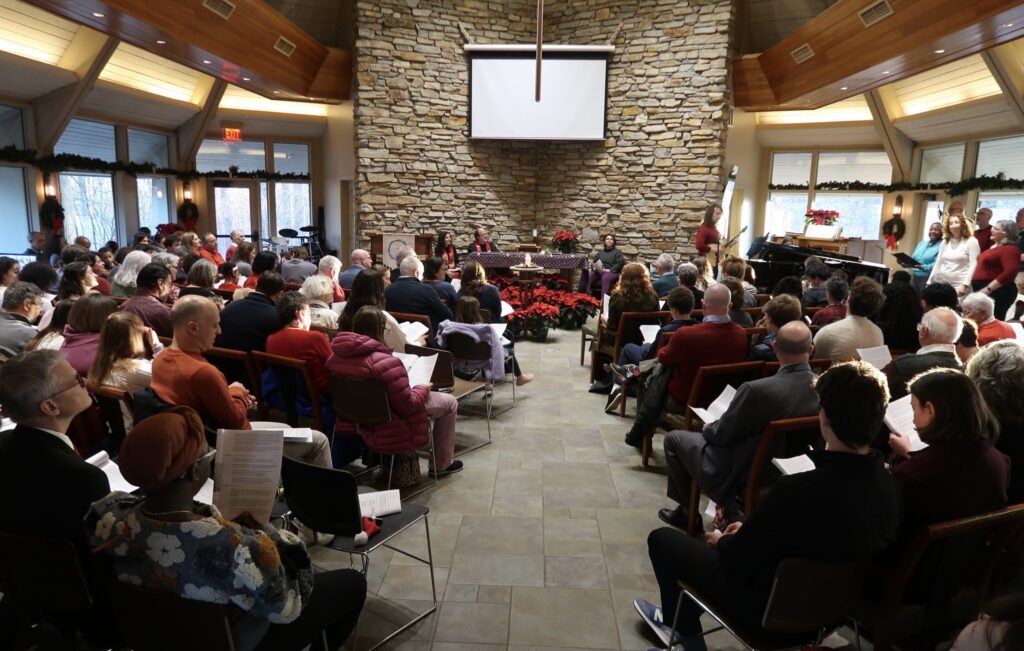
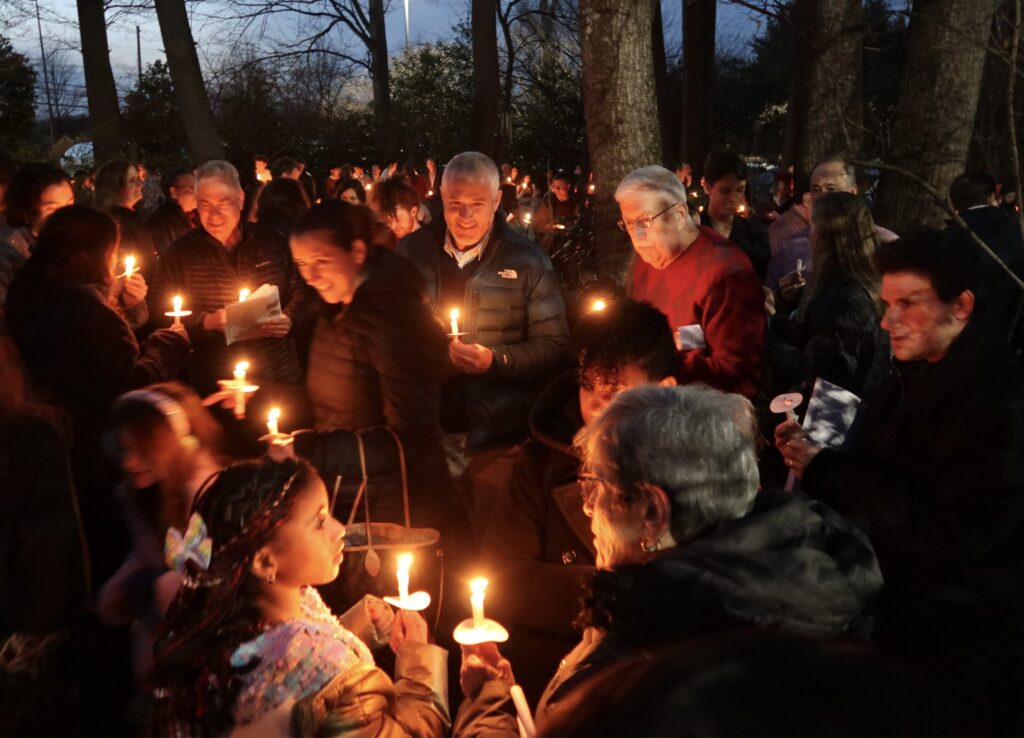
The Interfaith Families Project is a place of refuge and a place of rich possibility. Our home was born from locked doors, and yet here we are tonight thirty years later, gathered in this sanctuary and across the internet at Saint Mark — a place that has opened its doors to us.
And we gather tonight not to keep these doors shut behind us, but instead to help give us the courage to swing them open — and to go spread some light out into a weary world.
One of our youth here tonight, Margo Fioravanti once said:
“The only thing off limits is limiting myself.”
And Alex Schultz, another youth here tonight once said:
“Everybody can have a role in repairing the world and everybody’s world can be repaired.”
The promise of Christmas is that God is here, with us. Emmanuel.
So don’t lose heart. Don’t lose faith. Don’t lose energy and empathy.
Keep going, step by step, as long as it takes.
Because small steps turn to grand steps:
steps that can change lives — even change the world.
Friends, this season, let’s move forward with abundant hearts —
Let’s make plenty of room for all.
Let’s open wide the doors,
And take that first step outside.