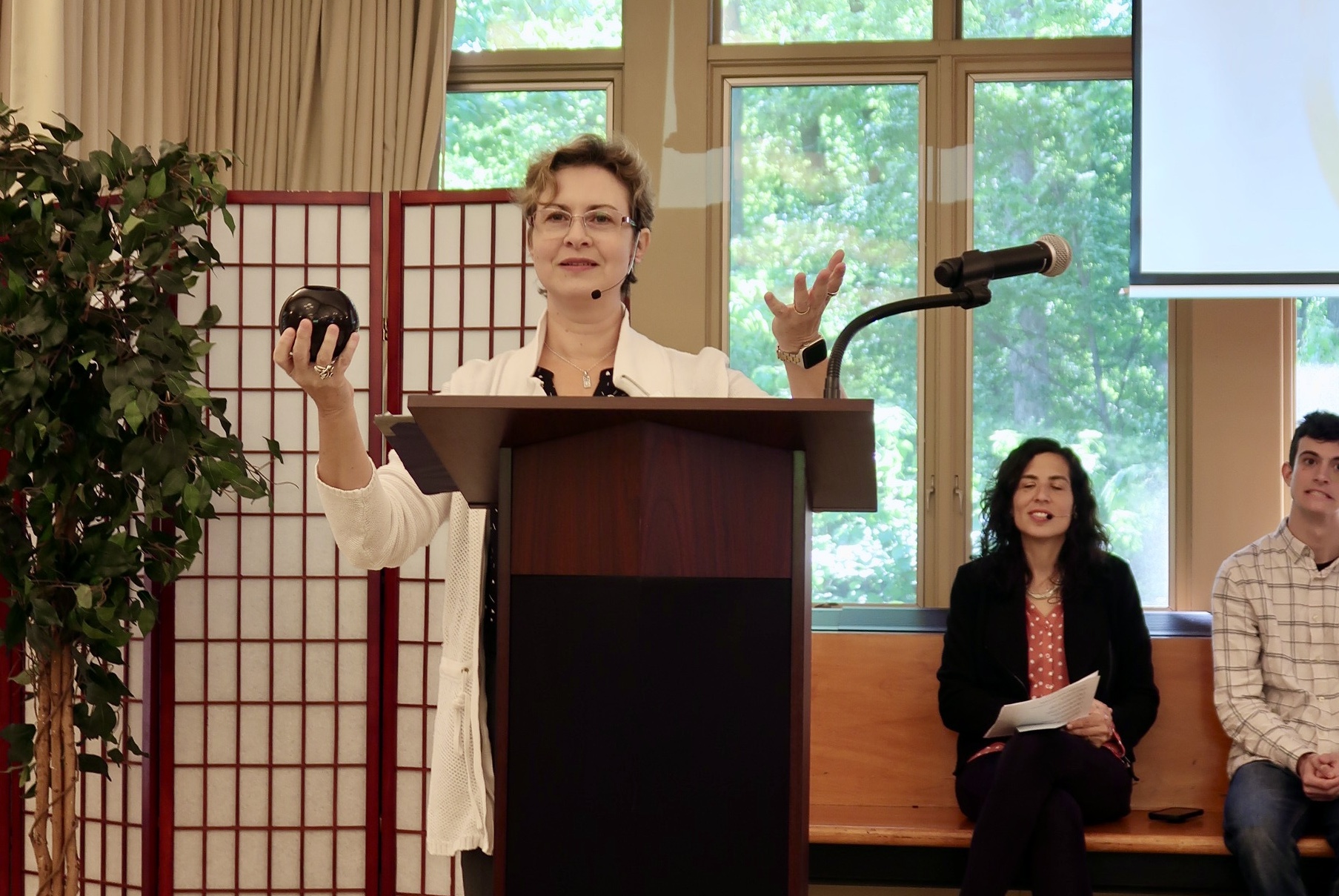
This post is adapted from a reflection given by Rabbi Debbie Reichmann at IFFP’s Gathering on May 3rd, 2026.
If you ask AI about the saying “hope for the best but prepare for the worst,” it will tell you that it is a “proactive mindset combining realistic risk management with positive thinking.”
I disagree.
I’m not saying that realism doesn’t have a place in this world, or that sensible planning isn’t a good idea.
Yes, take the umbrella.
Yes, pack the sunscreen, too.
And the bug spray.
But, focus on the joy to come.
Our readings today remind us that the future can not be known by us (despite the magic 8-ball). Instead of equating the unknown with “bad,” we can reframe it. While uncertainty can be a source of stress, filling us with dread or worry, it is also a gift. The unknown is the only place a miracle can happen; it can be a holy place. In that space, we can let our imaginations take us to soaring heights. We can lean on our possibilities. We can choose to grow.

When we say “prepare for the worst,” we have already instructed our hearts to prepare for heartbreak. We start our adventure with ominous clouds already in the sky. Think of all the great travels in our Holy Books: Abraham and Sarah setting off just because God said so, Jacob bringing his entire family to Egypt, Moses and the Israelites heading off into the wilderness, Joseph and Mary fleeing from Herod. If any of them had closed their hearts or given in to fear, we wouldn’t have our stories to tell, our lessons to learn. Their paths were not clear, yet they chose to move toward their future potential.
It is in making those choices that we find our treasure. Our traditions teach us of free will. In Judaism, this concept is Bechirah, literally, “choice.” Having the choice to affect our own futures is the cornerstone of both responsibility and spiritual growth. Rabbi Eliyahu Dressler, in the long ago 20th century, described the “bechira-point”: an inner battle-line that is drawn in each of us where choice is required. He reminded us that not choosing is a choice. It is when we recognize these bechira points that we have the opportunity to change.
Being aware of these points, looking out for them, reminds us to slow down and truly see what is around us. What is true at this moment? How can I choose mindfulness over habit? Can I choose patience, courage, or compassion? How can I move from defending against the worst to anticipating the joy?
For starters, let go of the future. You aren’t reading from a script already set down; you are writing it as you go. We, each of us, were made b’tzelem elohim, in God’s image. We carry immense potential within us, and we must lean into that. We must recognize our value and have the courage to trust our abilities.
Next, practice gratitude. When we acknowledge the wonders and gifts of each day, we bolster our ability to reflect that light back into the world.
Finally, stop and take a breath. Take a moment to find your feet on the ground, to center yourself and see the world, as Abraham Joshua Heschel urged us to: with radical amazement.
Yes. Take the umbrella. Be practical and sensible. But, don’t build your preparations into a cage.
The future is a gift because we can’t know it. It is where hope, joy, and satisfaction live. Embrace the unknown; it is the friend you haven’t met yet, it is the self you haven’t yet become.